
 April 30, 2026
 - International Moving
- 11 Min Read
Your Complete Guide to the International Moving Process
-
Share

Living abroad has become an increasingly common choice for people looking for new opportunities. Whether you’re chasing a career advancement, embracing retirement in a new country or starting a fresh chapter, an international move opens doors to extraordinary experiences.
It’s also a journey that requires careful planning. Moving to another country means coordinating shipments, preparing customs documentation and managing paperwork to ensure a smooth transition. It can seem overwhelming, but with the right preparation, you’ll be ready for every step of the process.
Need guidance? We’ll walk you through the entire journey step by step, from the planning stage months before departure to the moment your shipped belongings arrive at your new front door. You’ll learn how to choose a reliable mover, what happens to your belongings during international moving and how to manage everything from visa paperwork to moving notifications with confidence.
Planning for a Smooth International Relocation
Think of this phase as your mission control center. Long before you pack your first box, your international relocation is shaped through strategic planning and proactive preparation. The steps you take now — researching your destination, creating realistic budgets and organizing essential documentation — form the basis for a stress-free experience later. This preparation prevents common problems that catch you off guard and helps you understand how international relocation actually works from start to finish.
Start Researching and Budgeting 3-6 Months Out
Starting early gives you time to make informed decisions. Moving experts and government bodies recommend beginning the international moving process in stages, ideally three to six months before your departure date. For complex destinations with strict quarantines and lengthy visa processing, such as Australia, you’ll need six to nine months.
Your research should cover several critical areas, such as:
- Visa and residency requirements: Contact the United States Embassy or Consulate for your destination country to understand entry requirements, work permits and residency applications.
- Housing markets: Research neighborhoods, rental costs and whether you’ll secure housing before arrival or need temporary accommodations.
- Healthcare systems: Understand how medical care works in your chosen country and begin gathering records from your medical and dental professionals.
- School options: If you have children, search international schools and enrollment timelines.
- Banking requirements: Some countries require local bank accounts, and setting them up can take time. Research what documentation you’ll need.
- Social Security considerations: Notify the Social Security Administration about your move, especially if you receive benefits or plan to work abroad.
You also need to plan your budget. Your moving company’s quote is one piece of your total relocation cost. Create a comprehensive budget that includes visa application fees, flights for your family, temporary housing if your new home isn’t ready and a contingency fund of 10%-15% for unexpected expenses. Many families with pets forget to budget for quarantine fees, which can be thousands of dollars, depending on the destination. Writing a detailed financial moving checklist will ensure you’ve accounted for all potential expenses.
Timing matters, too. The time of year you move can significantly impact both cost and logistics. Peak summer months often mean higher rates and limited availability, while off-season moves offer better pricing and more flexible scheduling.
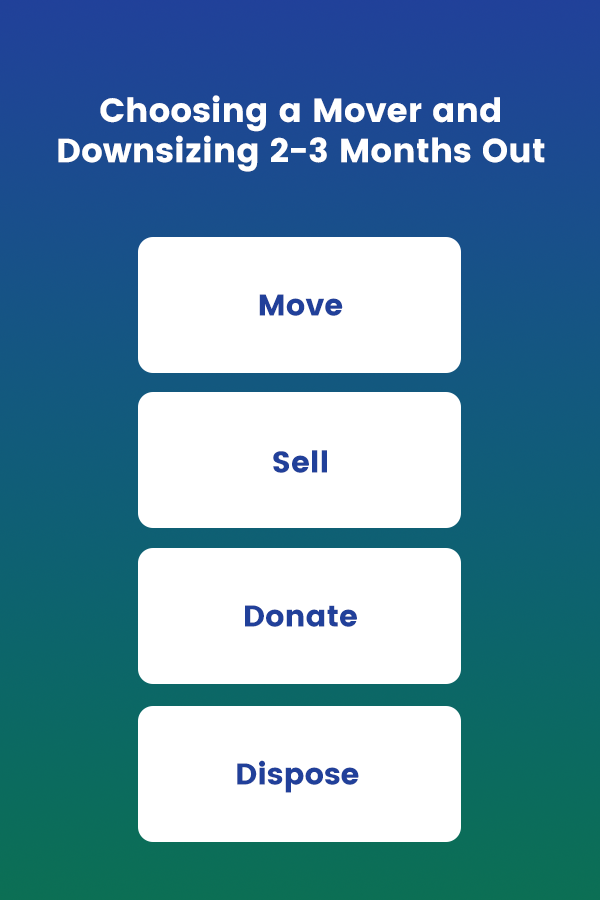
Choosing a Mover and Downsizing 2-3 Months Out
Selecting the right international moving company is one of the most important decisions you’ll make during this process. International moving requires specialized expertise, and movers differ in their experience and reliability.
Start by vetting at least three companies. Look for a company with experience that adheres to global quality standards and professional practices. Request itemized quotes from each company and carefully compare their services. Be cautious of drastically lower bids, which might signal a potential scam. Learn how to identify red flags and protect yourself from fraudulent operators.
A reputable mover is transparent. They’ll do a thorough inventory assessment, explain their packing methods, clarify valuation coverage options and answer questions about customs procedures. Trust your instincts. If something feels off, keep looking.
Downsizing is just as important as choosing your mover. It’s both a money-saving strategy and a simplification tool. International shipping costs are calculated by weight and volume, so every item you choose not to move lowers your bill. Consider whether large furniture pieces or electronics with different voltage requirements make sense to ship rather than replace at your new destination.
Create four categories as you sort through your home:
- Move: Items that you need and justify the shipping cost.
- Sell: Valuable items you no longer need that can offset moving expenses.
- Donate: Usable items that benefit local charities or friends.
- Dispose: Worn, broken or hazardous items that can’t be moved or repurposed.
Also, there are various items that you shouldn’t pack when moving abroad, including hazardous materials that can’t legally cross borders and items that may not be worth the shipping cost.
Finalizing Documents and Confirming Logistics 1-2 Months Out
With departure approaching, your documentation takes center stage.
Gather the essential paperwork for every family member, including:
- Passports: Ensure everyone’s passport is valid for at least six months beyond your planned stay.
- Visas: Confirm all work permits and entry visas are approved and in hand.
- Birth and marriage certificates: Collect original or certified copies for each family member.
- Driver’s licenses: Check if your destination country recognizes your U.S. license or requires conversion.
Ensure that you have both digital and physical copies of everything. Save digital copies in secure cloud storage and keep physical copies in your carry-on luggage so they’re easily accessible.
You and your moving company also need to complete and sign legally binding documents. The Bill of Lading is your shipment contract, detailing what’s being moved and the terms of service. You’ll also review and sign valuation coverage forms. Remember, this valuation coverage declares your shipment’s value and determines the mover’s liability.
Also, work with your mover to create a detailed, itemized inventory list. This document has multiple purposes. It’s your record of what shipped, it’s required for customs clearance, and it’s essential if you need to file a claim.
This is also the time to handle official notifications. You need to update your address and notify the relevant government agencies of your move. Contact utility companies to schedule final readings and disconnections. Submit a forwarding address to the United States Post Office so important mail reaches you during the transition. You should also notify the Internal Revenue Service (IRS) of your address change and be sure you understand your tax obligations as a U.S. citizen living abroad.
Confirm final logistics with your moving company, such as packing dates, pickup dates, estimated transit time and destination delivery timeline. Clear communication prevents confusion later and sets the stage for a smooth move.
What Happens to Your Belongings During an International Move
Once your belongings are shipped, they travel on a carefully orchestrated journey to your new home. Knowing the stages of international household goods shipping lets you track progress and know exactly what’s happening at each stage. Many families wonder, “Where is my stuff, and what’s happening to it?” Here’s your answer.
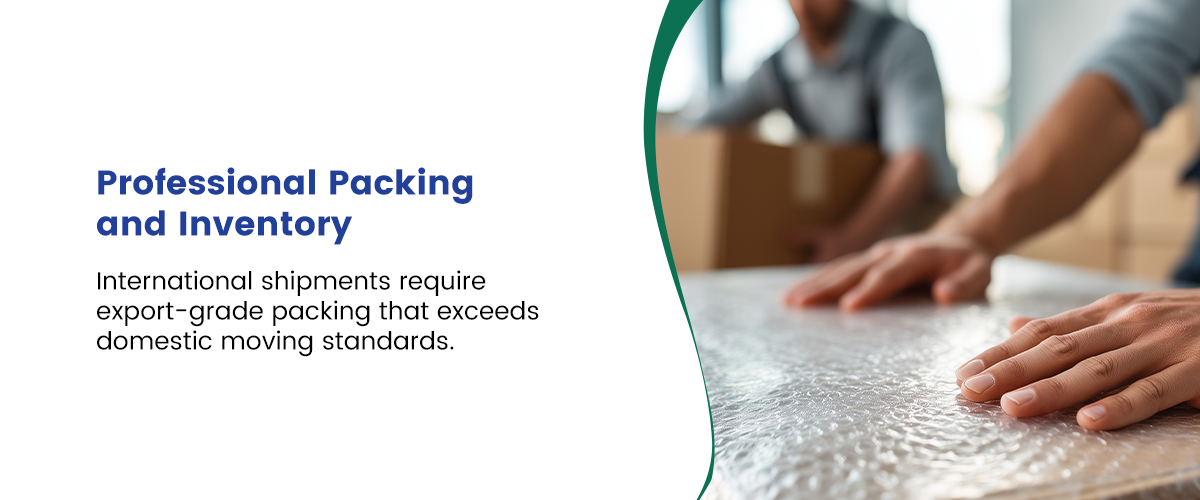
Step 1: Professional Packing and Inventory
International shipments require export-grade packing that exceeds domestic moving standards. Professional crews use thicker, double-walled boxes to endure ocean crossings and multiple handling points. Furniture receives specialized wrapping and protective materials, while fragile items get custom crating for maximum security.
BMS Moving & Storage’s residential moving services provide the attention to detail needed for professional packing. Our proven wrapping and protection methods help prevent scuffs, scratches and breaks during the long journey ahead. Also, tried-and-tested loading methods and expert handling ensure items stay secure through truck transport, loading cranes, and sea or air transit.
The packing crew thoroughly inventories every single item and box in your shipment. Each item receives a number and description, creating a master document used throughout your move for tracking, customs declarations and valuation coverage verification. This inventory becomes your most important reference document, so review it carefully and note any discrepancies immediately.
Ensure valuable possessions, such as heirlooms and delicate furniture, are carefully and securely packed to keep them safe and intact.
Step 2: Transporting to the Port or Airport
This first leg of the journey moves your packed shipment from your home to the designated U.S. departure point. Your belongings are sealed in a shipping container or consolidated with other shipments if you’re using groupage service and transported via truck to the port or airport.
The container undergoes a check-in process where documentation is verified, and the shipment is logged for international transit. Your moving company tracks this stage and provides updates on when your shipment arrives at the departure facility.
Step 3: Navigating Sea or Air Freight
There are two shipment freight options to choose from — ocean or air freight. Each accommodates different needs and budgets. Understanding the international moving timeline and how long it takes helps you choose the right method for your needs and budget.
Ocean freight offers the most cost-effective solution for full household moves:
- Speed: Transit times range from four to eight weeks, depending on your destination.
- Cost: Ocean freight is generally less expensive per unit of weight than air freight.
- Capacity: This method is ideal for moving entire households, large furniture and vehicles.
- Best for: It’s best suited for families moving homes who can wait for delivery.
Air freight provides faster delivery at premium pricing:
- Speed: Transit times range from one to two weeks.
- Cost: Air freight is generally five to 10 times more expensive per weight unit than ocean freight.
- Capacity: It’s best suited for essential items and smaller shipments.
- Best for: Choose air if you need key belongings quickly or are shipping only priority items.
The price difference reflects the speed and handling differences between these methods. Many families choose a hybrid approach, shipping the bulk of their household via ocean freight, while air shipping essentials they’ll need immediately upon arrival.
Your moving company helps you evaluate which option or combination makes sense for your timeline and budget.
Step 4: The Customs Clearance Process
Every international shipment must clear customs in the destination country. This mandatory standard process allows the government to verify your shipment’s contents and ensure compliance with local import laws.
Customs officers review your inventory list, shipping documents and can physically inspect your container if needed. They assess any applicable duties or taxes based on the items you’re importing and your residency status.
Thorough preparation during the planning phase pays off during this step. Complete, accurate paperwork moves through customs smoothly. Mistakes or omissions are the most common causes of delays and unexpected fees during international moving. Missing documents, unclear descriptions or prohibited items can also hold up your shipment and extend delivery.
Professional movers and their destination agents handle the customs process on your behalf. They communicate with officials, submit required forms and address any questions that arise.
Customs clearance typically takes three to five business days, but plan for seven to 10 during peak summer months when shipment volume is highest.
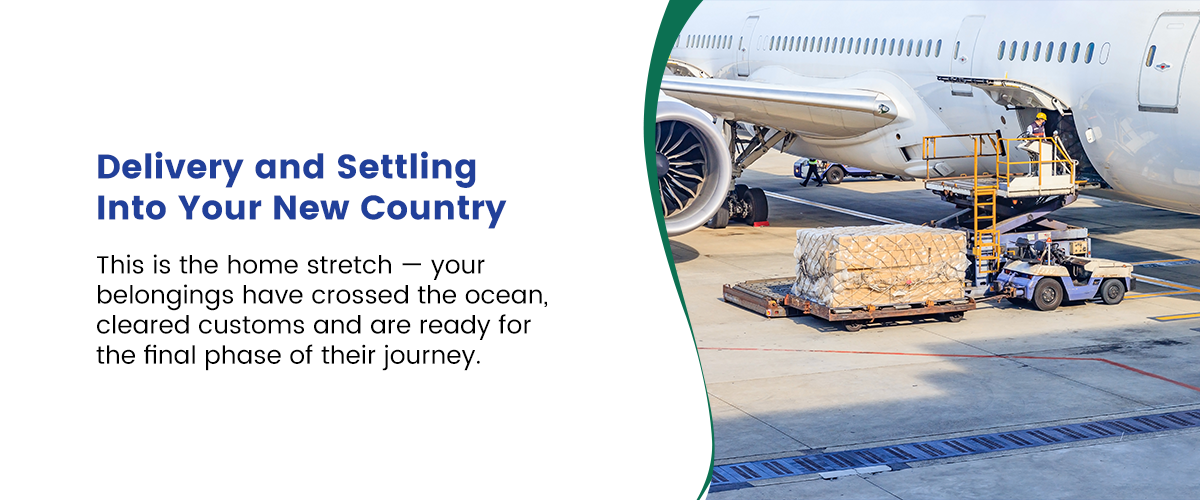
Delivery and Settling Into Your New Country
This is the home stretch — your belongings have crossed the ocean, cleared customs and are ready for the final phase of their journey. This exciting stage brings your shipment to your new front door and helps you transform an empty house into a home.
Step 5: Receiving Your Shipment at the Destination Port
Your destination agent is critical during this final phase. A trusted local moving partner receives your shipment after customs clearance and coordinates the last-mile delivery to your new address.
The destination agent contacts you to schedule delivery, confirms your new address and provides an estimated arrival window. They serve as your on-the-ground contact throughout the delivery process, handling local logistics and navigating any destination country requirements.
For peace of mind, stay in touch with your destination agent while your shipment is en route. Confirm your contact information, ask questions about local delivery procedures and clarify any special access requirements for your new home, such as narrow streets, building elevators and parking restrictions.
Step 6: Final Delivery to Your New Home
Delivery day marks the finish line of months of planning. The moving crew arrives at your new home, unloads all items, places boxes in designated rooms and reassembles basic furniture pieces.
Ensure you have your inventory list ready to check off items as they’re offloaded from the truck, noting any damage or missing pieces. Document problems with photos and written descriptions before the crew leaves, since you’ll need this documentation to file claims.
If your new home isn’t quite ready to move into, secure storage services can provide a safe temporary solution until you’re ready to receive your belongings and unpack.
Unpacking and Getting Settled
Strategic unpacking helps you establish functionality quickly rather than living in boxed chaos for weeks.
Prioritize these areas first:
- Bedrooms: Arrange sleeping spaces so everyone has a comfortable place to rest after a long journey.
- Bathrooms: Create functional bathrooms with toiletries, towels and essentials.
- Kitchen: Set up your kitchen so you can prepare meals and avoid relying on takeout during an already expensive transition.
Work room by room rather than bouncing between spaces. Completing one area fully gives you functional spaces to retreat to when the rest of the house still needs work.
Take your time with the rest. You don’t need to unpack everything immediately. As you live in the space, you’ll find the best places for items and even rearrange your space entirely.
With your house now a home, you can focus on settling into the community. Connect with your new community through resources that offer valuable guidance on meeting fellow expats, building support networks and building your new life.
Let BMS Moving & Storage Handle Your International Move
An international move is an exciting milestone, and the right partner makes all the difference.
For more than 85 years, BMS Moving & Storage has provided full-service moving solutions for families relocating worldwide. From the moment you request a quote to the day we deliver your last box, our experienced team handles every detail from professional packing and secure shipping to customs coordination and timely, effective delivery to your new home.
Your belongings represent years of memories, and your move marks the beginning of an exciting new chapter. We’re here to ensure that transition happens smoothly, professionally and with complete peace of mind.
Ready to get started? Call BMS Moving & Storage at 833-876-0075 for a free quote, or contact us today to learn how we make international relocation stress-free. Find your nearest BMS location to begin planning.
Related Blogs