 November 20, 2026
- How-To
- +1
- 6 Min Read
- How-To
- Moving Guides
- 6 Min Read
How to Handle Fragile Items During Your Move
-
Share
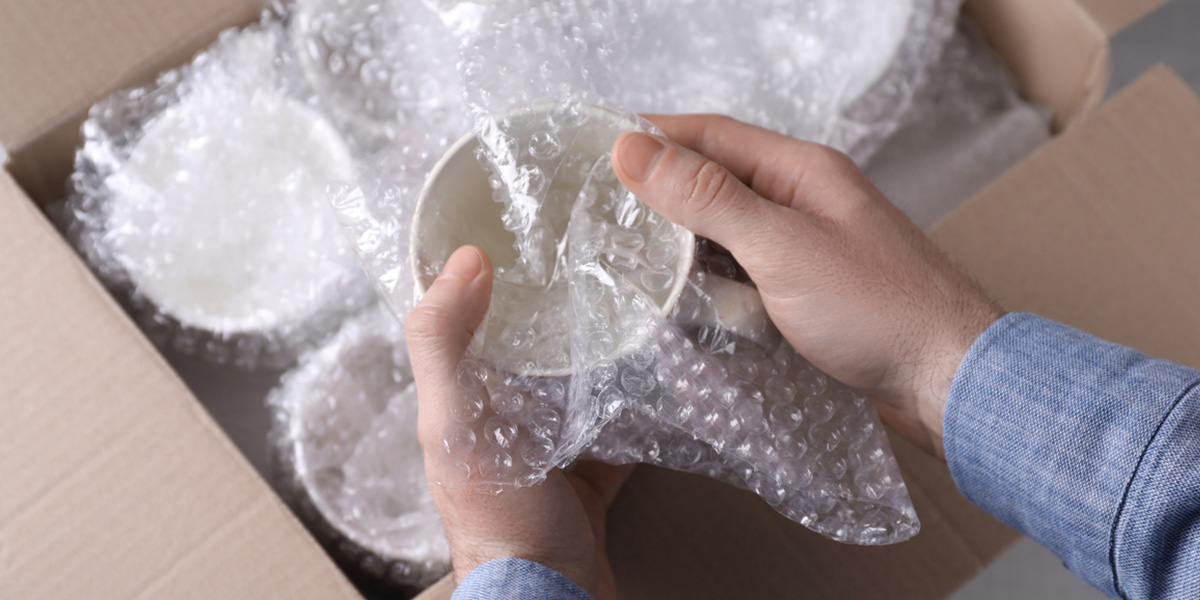
When you’re preparing to relocate, one of the most important tasks is figuring out how to protect your fragile belongings. Items such as electronics, mirrors or full sets of dishes can be expensive to replace, while others, like heirlooms, are valuable because of the memories attached to them.
Whether you are moving yourself or hiring professionals, these tips show you how to handle fragile items during your move, from choosing the right supplies to handling specific delicate items.
Start With the Right Packing Supplies
When preparing for your move, the following supplies make it easier to package and safely transport fragile goods:
- Unprinted packing paper: This paper is better than newspaper because ink can rub off on items.
- Bubble wrap: This material adds extra cushioning around delicate pieces.
- Packing peanuts or foam inserts: These fill gaps and absorb shock.
- Sturdy small and medium boxes: These boxes are easier to manage and less likely to break open.
- Several rolls of packing tape: Extra tape reinforces box seams and keeps lids secure.
- A permanent marker: This marker makes box labels easy to read.
- Cell inserts or cardboard dividers: These keep glasses and stemware separated and protected.
How to Pack Fragile Items for Moving
Once your supplies are ready, use this step-by-step process to protect breakable belongings from shifting, cracking or chipping in transit.
1. Reinforce Your Boxes
Strengthen the bottom of each box before adding anything. Tape the center seam first, then add two more strips of tape across the seam to secure the bottom and keep the box from opening while it is being lifted or carried. Use double-walled boxes for heavier items like stoneware or ceramics.
2. Cushion the Bottom of Every Box
Use two to three inches of packing peanuts, crumpled packing paper or foam sheets to create a softer base that will protect your delicate items if the box is handled roughly during loading, unloading or transport.
3. Wrap Each Piece Separately
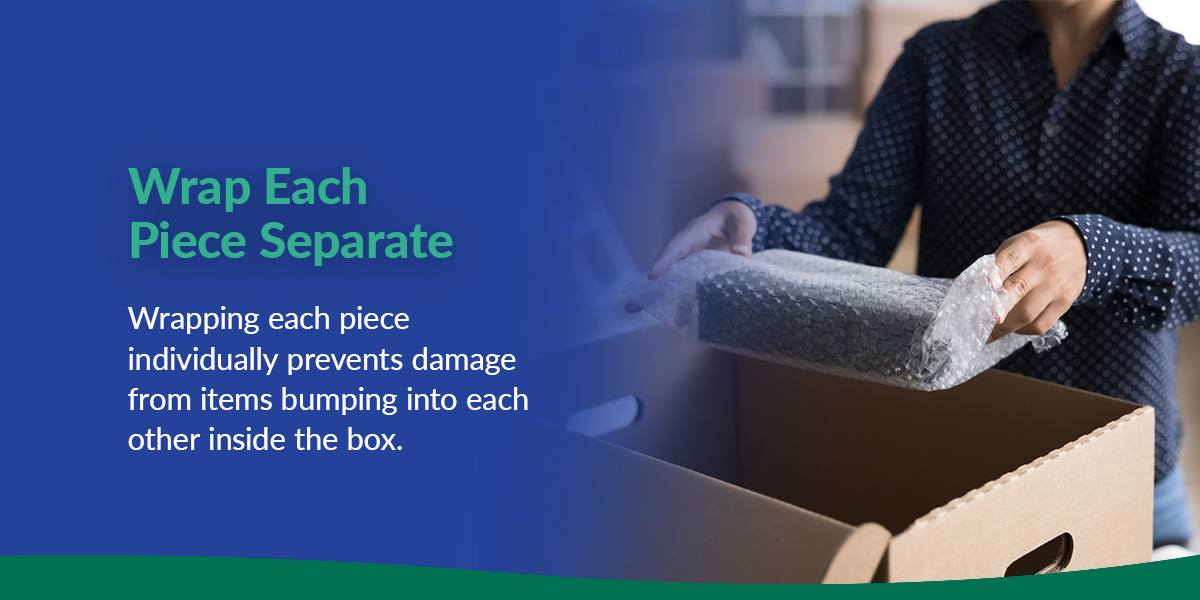
Wrapping each piece individually prevents damage from items bumping into each other inside the box. Cover corners, handles, rims and thin parts carefully because these areas are more likely to chip or crack.
4. Choose Smaller Boxes for Heavy Delicate Items
Smaller boxes are easier to lift, making them ideal for heavy, fragile items like stoneware, dense ceramics and full sets of dishes. They also leave less room for items to move around.
5. Fill Every Empty Space
Empty space lets items move around inside the box. Fill all gaps with crumpled packing paper, foam inserts or packing peanuts. Before sealing the box, try the shake test. Gently shake the box, and if the items move, add more filler before taping it shut.
6. Label Boxes “This Side Up” and “Fragile”
Labels help everyone know which boxes need careful handling. Write “Fragile” and “This Side Up” on at least two sides and on top of each box to help movers identify delicate items when boxes are turned or stacked. Use a thick permanent marker, and add arrows for boxes that need to stay upright.
Packing Tips for Moving Specific Fragile Items
Some fragile items need extra care because of their shape, weight or material, and the best way to pack breakables for moving often comes down to these small adjustments.
Dishes and Glassware
The safest way to pack dishes when moving is to place them upright on their edges, like books on a shelf, with a sheet of packing paper, cell boxes or cardboard dividers between each piece. Packing plates upright is safer than stacking them flat because flat plates can crack when weight presses down on them. For stemware and glasses, place crumpled packing paper inside each glass before wrapping it to support the rim.
Mirrors and Artwork
Place painter’s tape in an X shape across the glass on mirrors and framed art to hold the glass together in case it cracks. For paintings, use acid-free paper or pad wrap before adding outside padding. Avoid placing bubble wrap directly on painted surfaces because it can stick to certain finishes. Move mirrors and artwork upright.
Electronics
Remove cables, memory cards and loose parts before packing electronics, then wrap the device in bubble wrap. Use the original box whenever possible, as it was designed to fit that item. If the original box is gone, use a strong double-walled box that is slightly larger than the item. Fill all gaps with foam or soft packing material, and keep TVs and monitors upright.
Lamps
Take lamps apart before packing, then put the small parts in a labeled plastic bag so they are easy to find later. Wrap the lamp base in packing paper or bubble wrap, then pack it in a sturdy box. Place lampshades upright in a separate padded box, nesting smaller shades inside larger ones with paper between them.
Heirlooms and Antiques
Heirlooms and antiques often carry memories that cannot be replaced. Take photos of each item before packing it, then use more than one layer of protection. Start with acid-free tissue or packing paper, add bubble wrap and finish with pad wrap or a moving blanket. Valuable or very fragile pieces may need professional packing or custom crating.
Frequently Asked Questions About Packing Fragile Items
Learn more about how to pack delicate items during a move in the FAQs below.
What’s the best process for packing fragile items?
Start with a sturdy box and line the bottom with packing paper or bubble wrap. Wrap each item individually to keep pieces from touching, then place lighter items on top of heavier ones. Fill any empty gaps with packing material so nothing shifts during the move.
What is double-boxing?
Double-boxing is an extra-safe packing method in which you wrap a fragile item, place it inside a smaller padded box, and then place that box inside a larger box filled with more packing material. This method works for all kinds of fragile items, including electronics, fine crystal, thin glassware, fine porcelain, delicate artwork, heirlooms and high-value collectibles.
What materials do I need to pack fragile items when moving?
Use unprinted packing paper, bubble wrap, packing peanuts or foam inserts, sturdy small and medium boxes, several rolls of packing tape and a permanent marker. For glasses and stemware, use cell inserts or cardboard dividers. Remember, unprinted packing paper is better than newspaper because ink can rub off on your items.
Make Your Move Stress-Free With BMS Moving & Storage

These tips can help you protect fragile items when moving, and professional support can provide added peace of mind for valuable or delicate belongings. BMS Moving & Storage has nearly 90 years of experience helping customers move with care. We offer comprehensive residential moving services, including professional packing and unpacking. Contact our team or call 833-876-0075 to learn more about protecting your fragile and valuable items as you prepare for your new chapter.
Related Blogs