 August 14, 2026
Moving out of state comes with many questions — Can I afford the new cost of living? How do I choose what to take with me when I move? What’s the best way to notify people about my change of address? Trying to answer these while juggling logistics can feel overwhelming. Stay organized and on top of the details by making a comprehensive plan.
This checklist for moving to another state lets you make a smooth, stress-free transition. Use it to mark off tasks as you get closer to your big day. Early planning, budgeting, packing, changing utilities — we’ll cover it all here.
What You Need to Know About Moving to Another State
Relocating to a new state is a significant life change with multiple considerations.
- Legal shifts: Research the laws and regulations around vehicle registration, driver’s licenses and voter registration. For example, in California, you have 20 days to register your car after becoming a resident.
- Cost of living: Look at housing expenses, utility rates, localized taxes, groceries, healthcare and transportation expenses.
- Taxes: Compare state income taxes, sales tax and property tax rates, which will impact your take-home pay.
- Healthcare: Check if your current health insurance network extends to your new state.
- Commutes: Research local traffic patterns and public transit options to determine how your new neighborhood affects your daily commute.
- Schools: If you have children, investigate local school districts, test scores and extracurricular programs.
State-to-State Moving Checklist
Whether you’re moving for the first or fifth time, this interstate moving guide for beginners and veterans can simplify the transition.
1. Visit or Research Your New Location
If possible, visit your new city to get a feel for different neighborhoods, real estate options and local attractions. If you can’t make it there in person, take a virtual tour of areas with Google Maps Street View or research the city online. Check out sites that give you insight into livability, transport options, demographics and trends.
2. Create a Moving Budget
Relocations across state lines involve costs that range from minor to consequential. Factor these interstate moving costs into your budget.
- Transporting belongings: This cost depends on whether you choose full-service professional movers, hybrid services, moving containers or DIY truck rental.
- Travel distance: Movers and truck rental companies charge mileage-based rates. If you choose to drive yourself, calculate the total fuel cost.
- Packing supplies: Some companies include packing materials in the quote. If you’re packing yourself, remember to budget for boxes, packing tape and cushioning such as bubble wrap.
- Travel and accommodation: Add expenses like airfare, meals, hotels, fuel or pet transportation fees.
- Utility charges: Plan to pay for disconnection, transfer and new connection fees.
3. Pick Your Move Date
Summer is peak moving season. Weekends and the beginning or end of the month are also busy times for moving. If you’re booking professional movers, do it well in advance. To save some money, consider midweek, midmonth moves in the fall or winter.
4. Research Moving Companies
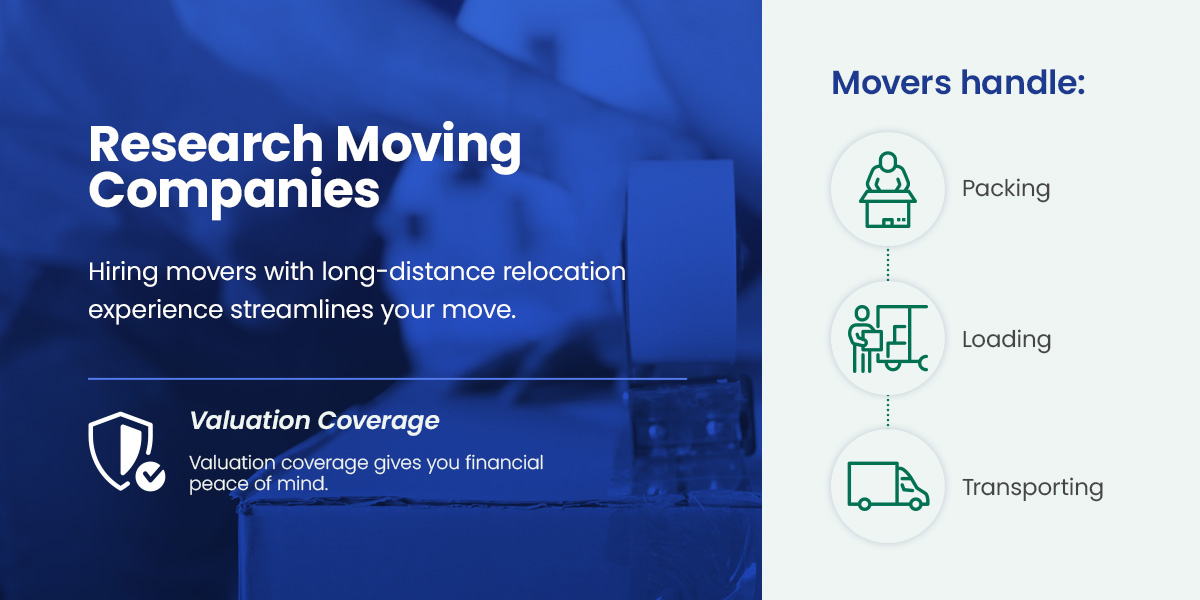
Hiring movers with long-distance relocation experience streamlines your move. They handle packing, loading and transporting your belongings to your new home. Valuation coverage gives you financial peace of mind. Get a few written estimates from movers, read customer reviews and ensure their services match your needs.
A Federal Motor Carrier Safety Administration registration and a valid U.S. DOT number are mandatory interstate move requirements for moving companies. You can verify the company using the FMCSA Mover Search Tool.
5. Start Downsizing and Decluttering
The weight and volume of your belongings increase the cost of moving. Now is the perfect time to declutter. Go through your belongings room by room, sorting them into piles labeled “Keep,” “Donate/Sell” and “Throw Away.”
6. Gather Packing Supplies
Even if you choose full-service professional packing, you may need extra materials. Scout local stores for free boxes or buy materials from a store. Get these supplies well ahead of your move date to give you enough time to pack.
7. Pack Smarter, Not Harder
Working with a moving company simplifies this step. They have the equipment, techniques and materials to protect your belongings. For DIY packing, create an inventory list and label each box so you know what’s inside. Protect fragile items with bubble wrap or household linens.
8. Make Travel Arrangements
Interstate moving often means flying or staying at a hotel to break up a long road trip. Book your plane tickets, car rental or accommodation in advance. If there’s a gap between your move-out and move-in dates, make a plan for temporary housing.
9. Change Your Address
Here’s a comprehensive list of who to notify about your move.
- USPS — use their Change-of-Address service to forward your mail to your new home
- Your insurance company
- Local election commission for voter registration
- Children’s schools or universities
- Healthcare providers
- Banks and credit card companies
- Subscription services
- Social Security Administration
- Department of Motor Vehicles
- Employers
- Accountants or financial advisers
- Family and friends
10. Gather Important Records
If you have kids, you need to transfer school records to their new school. The school may also request medical records, recommendation letters or proof of immunization. Keep your family’s physical or digital medical and dental records in a safe place.
11. Transfer and Schedule Utilities
Notify your utility providers about your move at least one month before. Arrange to disconnect relevant services and schedule transfers or installation at your new address. Utilities to contact include water, sewer, electricity, gas, cable and internet.
12. Confirm the Logistics With Your Moving Company
Around two weeks before move day, finalize the plans with your movers, verifying the date, cost, time and valuation coverage. Research whether you need parking permits for the moving truck at your current or new home.
13. Arrange a Move-Out Cleaning
Many landlords require tenants to clean the property and repair any damage to get their deposit back. If your budget allows it, hire a professional cleaning company. You can also tackle this job yourself once your belongings are out of the house.
14. Pack Your Essentials
Pack a separate bag with what you’ll need for your first night in your new home. Items might include toiletries, clothing, medication and snacks. Don’t put essential documents on the moving truck. Instead, keep personal IDs, medical records, moving contracts and property agreements in a folder.
15. Master Move Day

Your meticulous planning has paid off. Check off these final items before heading to your new home.
- Oversee the move: Keep an eye on things as the movers work. Double-check that you haven’t left anything behind, either at your old home or the final destination. Check your belongings for damage when they come off the truck.
- Do a final check: Walk through every room, close windows, switch off the lights and lock the doors.
- Leave your keys: Hand over the keys to your landlord, real estate agent or new owners.
16. Settle In
Settling into a new place takes time, so be patient. Try these tips to make the process smoother.
- Unpack essentials first: Set up your primary bedroom and bathroom before worrying about the rest of the house.
- Scout the neighborhood: Walk or drive around your new area. Locate your nearest emergency services, grocery stores, pharmacies and gas stations.
- Personalize your space: Incorporate items from your old home, like rugs, curtains or artwork. It helps create a welcoming, familiar environment.
- Connect with people: Get to know your neighbors by joining a recreational sports league, finding a faith community or volunteering with local organizations.
- Get involved at work: Introduce yourself to colleagues and attend company social events. Saying yes to invitations will build your new social circle.
Experience Smooth Interstate Moving With BMS Moving & Storage™
Since 1936, BMS Moving & Storage™ has moved families, businesses and military personnel across state lines. Our proven track record translates into a seamless, stress-free move. We personalize our solutions based on your specific needs. Choose from full-service or partial packing, specialty item handling or secure storage to fit your budget. After a free in-home or virtual survey, we provide a transparent up-front quote. You’ll always know what you’re paying for without any surprises.
Experience true peace of mind by partnering with trusted local movers known for their reliability, quality and exceptional care. Call 833-876-0075 to discuss your move or request a free estimate today.
Related Blogs