 July 29, 2026
 - International Moving
- 6 Min Read
What You Should Bring When Moving Internationally
-
Share
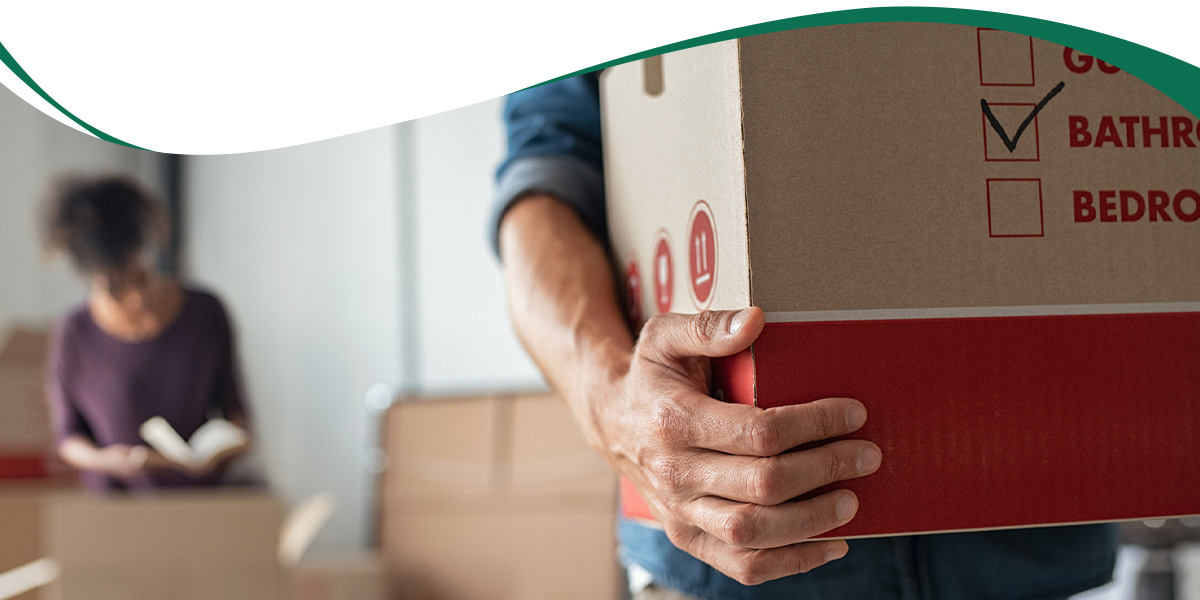
Planning an overseas relocation forces you to make challenging decisions, since bringing everything you own with you is rarely practical or affordable. These decisions can be emotionally and financially complex, but each item you leave behind will ultimately reduce your shipping costs, since international movers base pricing on volume.
This guide covers the essential things to pack when moving abroad and what’s worth shipping in an international move, allowing you to make informed selections that protect your belongings and budget.
Quick Checklist of Items to Bring When Moving Internationally
Keep these essentials with you during your overseas move:
- Passports, visas and birth certificates
- Marriage certificates and medical records
- Driver’s licenses and other identification
- Physical and digital copies of important documents
- Prescription medications in their original packaging
- Copies of prescriptions with generic drug names
- Essential electronics, chargers and adapters
- Jewelry, family photos and irreplaceable mementos
- Favorite toys, comfort items and pet supplies
- Destination-specific paperwork for pets, school, work or residency
What to Pack for Your International Move
Now that we’ve briefly discussed what to bring, let’s discuss these items in more detail. When preparing household items for relocation abroad, focus on items you genuinely need and can’t easily replace.
Absolutely Essential Documents
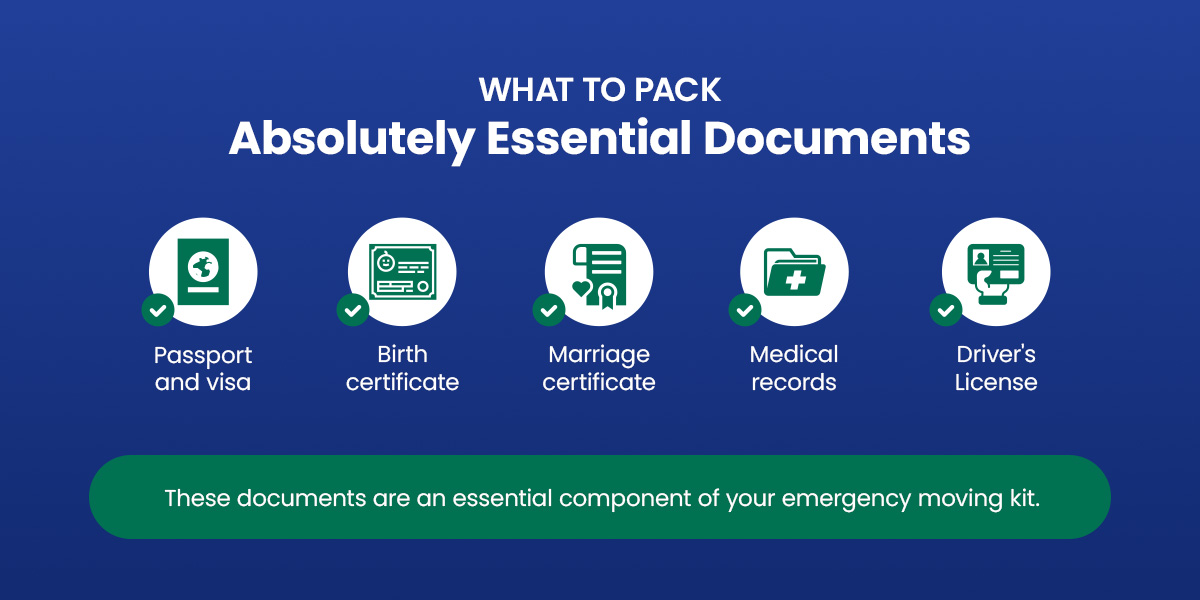
The U.S. Department of State recommends having immediate access to critical papers such as your passport, visa, birth certificate, marriage certificate, medical records and driver’s license. You will need this documentation to establish residency, open a bank account, or access healthcare abroad. Make physical copies for your carry-on bag and save digital scans in secure cloud storage.
These documents are an essential component of your emergency moving kit.
Medications and First-Aid Supplies
Keep all medication in its original packaging with a prescription label. A three-month supply prevents gaps in care while you establish new healthcare providers. Bring physical copies of prescriptions showing the generic drug name, since pharmacists abroad may not recognize U.S. brand names.
It’s also wise to bring a simple first-aid kit with bandages and over-the-counter meds such as pain relievers and antiemetics.
Electronics and Adapters
Pack essential electronics such as your laptop, smartphone, tablet and their chargers in your carry-on. Research your destination country’s electrical standards before departure, since voltage requirements and plug types vary significantly. You can invest in adapters to protect your investment and help you stay connected abroad.
Clothing and Personal Items
A well-packed, versatile wardrobe saves money and maximizes comfort abroad. Based on your destination’s climate, pack layers, versatile pieces and favorite items you’ll wear in the first few months. You can buy additional clothing locally as needed.
Don’t risk shipping irreplaceable mementos. Jewelry, family photos, external hard drives and heirlooms should travel with you for peace of mind.
Supplies for Pets and Children
Familiar comforts make a big difference for kids and pets during those first few days. Pack children’s favorite toys and books to ease the transition, and bring your pet’s usual food, treats and a familiar blanket or toy to help them feel secure in a new environment.
Overseas pet relocation requires you to prepare specific health documents. Consult with your veterinarian about vaccination requirements, health certificates and quarantine regulations.
What to Leave Behind When Moving Internationally
Knowing what not to ship internationally could save you thousands. Strategically discarding or donating items is the most effective way to control shipping costs.
Furniture and Large Household Goods
Shipping your furniture may ultimately cost more than replacing it when you reach your destination. Because movers charge by volume, bulky items can quickly increase costs. Buying new furniture is often more economical, helps you avoid transport damage and lets you experiment with your new country’s decorating style.
Appliances and Incompatible Electronics
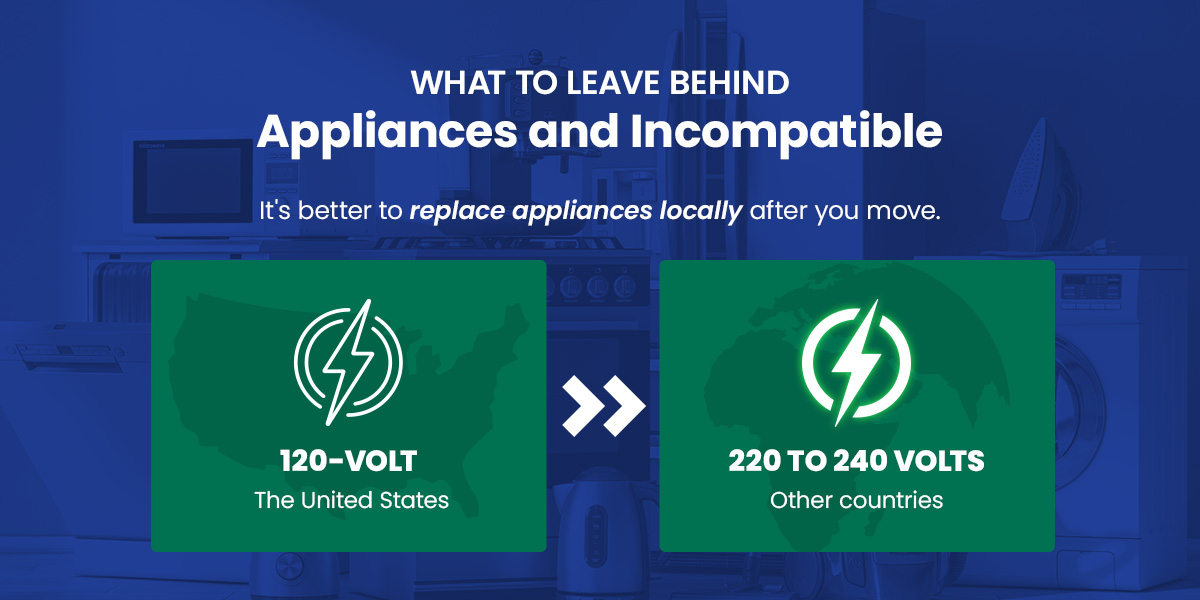
Voltage mismatches damage electrical appliances, so sell or donate most items before you go. The United States uses 120-volt electrical systems, while many other countries operate on 220 to 240 volts. Heat-generating appliances such as hair dryers, coffee makers, microwaves and washing machines rarely work properly with voltage converters.
Even if you own a converter, the difference in electrical cycles can damage motors and heating elements, so it’s better to replace these appliances locally after you move.
Prohibited or Restricted Items
Every country maintains strict customs regulations. Commonly prohibited items include foods, fresh produce, plants, seeds, soil and animal products. Some countries also restrict or ban aerosols, batteries and flammable materials.
Since ignoring customs laws can lead to fines, confiscation and delays, check your destination country’s official customs website before you start packing. U.S. Customs and Border Protection provides information about what travelers can and cannot bring across borders, including hazardous materials that movers can’t legally transport.
Everyday Consumables and Perishables
It’s impractical to ship food, cleaning supplies, toiletries and other everyday items. These low-value, heavy items unnecessarily increase your shipping volume, so it’s best to give away unused products before you move and restock when you arrive at your destination.
How to Handle Case-by-Case Items
Not every decision is black and white. Use these strategies to evaluate items that don’t fall into “pack” or “leave” categories.
Research Replacement and Shipping Costs
A few minutes of local research can save you thousands in unnecessary shipping fees. Check online retailers in your destination country to determine if furniture, appliances and other household goods are more or less expensive at your destination.
Compare the shipping and replacement costs at your destination, and leave items behind if replacing them is cheaper. Factor in the item’s condition, since older furniture or worn appliances may not justify high shipping expenses.
Weighing Sentimental vs. Financial Value
Some decisions are too complex to reduce to a pure cost/benefit analysis, and only you can decide if the sentimental value is worth the extra cost. Priceless heirlooms, handmade furniture from family members or items with profound personal meaning may warrant shipping costs that seem financially impractical.
Be intentional about these choices. For large sentimental items, consider whether taking a small part or detailed photographs might preserve the memory. A single drawer taken from your grandmother’s writing desk or a swatch of fabric cut off a beloved chair can carry the same emotional weight at a fraction of the cost.
Consider Long-Term Storage
Professional storage offers peace of mind when you have belongings that are too valuable to ship or sell. It’s a practical third option for items you want to keep but can’t bring with you. Long-term storage is especially useful for high-value furniture, seasonal belongings or anything you know you won’t need during an overseas assignment or extended stay abroad.
Start Your Overseas Move With BMS Moving & Storage™
Making educated packing decisions is the first thing you can do to streamline and organize an overwhelming move. Partnering with a trustworthy mover is another.
As an international moving company, BMS Moving & Storage™ provides transparent, stress-free service. We simplify logistics and provide transparent quotes, removing the financial uncertainty of moving.
With over 75 years of experience, we’re your trusted partner for a stress-free overseas move. Ready for a smoother start? Get a free quote today or call 833-876-0075 to speak with our team.
Related Blogs